Is It Good To Stay In The Latin Quarter In Paris?
A practical look at whether the Latin Quarter is a good place to sleep on a budget: room prices, the two affordable hotels actually in it, tourist tax, transport works and the trade-offs.
Is It Good To Stay In The Latin Quarter In Paris?
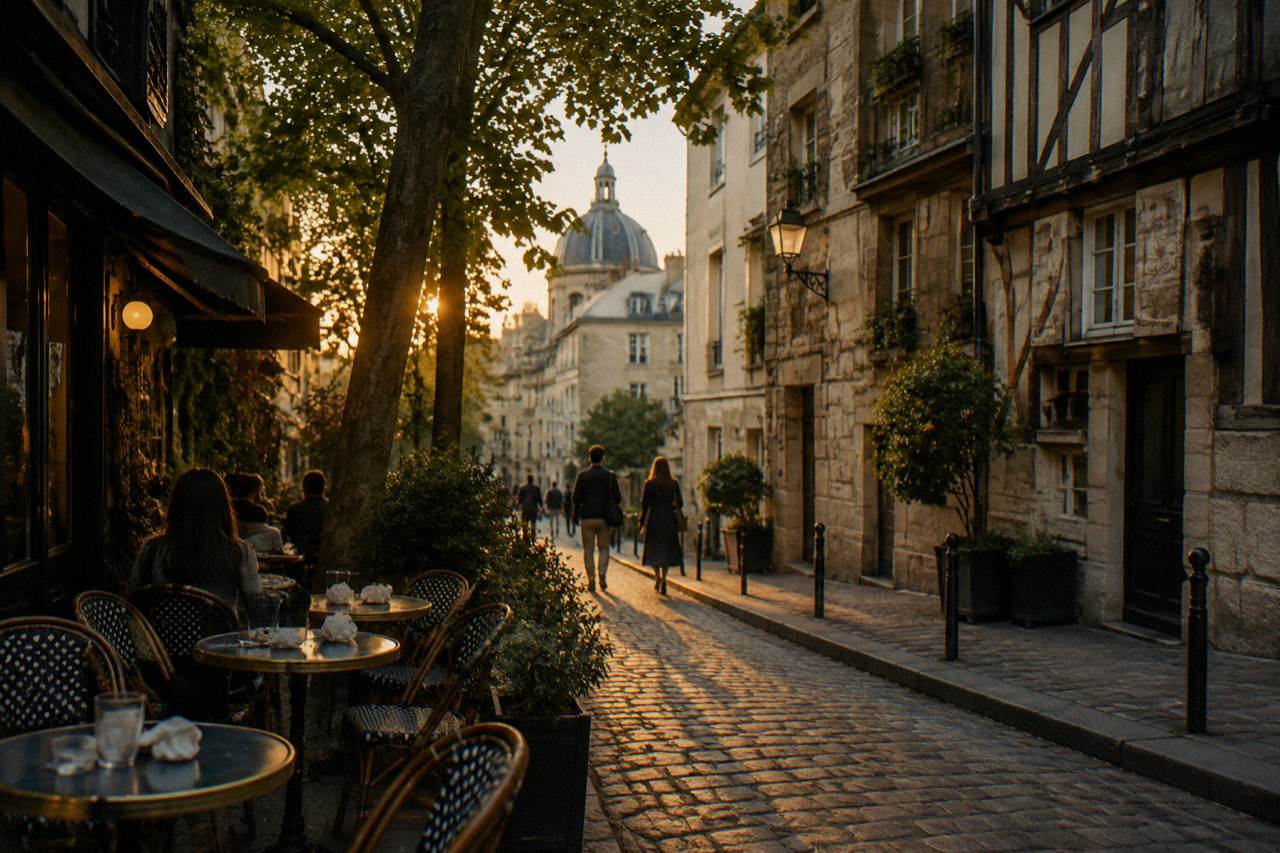
Yes, for most budget travellers the Latin Quarter is a good place to stay, with one large caveat: genuinely cheap rooms inside it are scarce. The 5th arrondissement puts you within walking distance of Notre-Dame, the Seine and two RER hubs, and its side streets are quieter than the boulevard strips around Gare du Nord. But the affordable inventory is thin, so you either pay more per night or cross the river into the Marais or up to Montmartre. If the thin budget inventory here has you eyeing other postcard districts, our piece on whether a room near the Eiffel Tower earns its price weighs the costs and names cheaper streets nearby that still give you a good night's sleep.
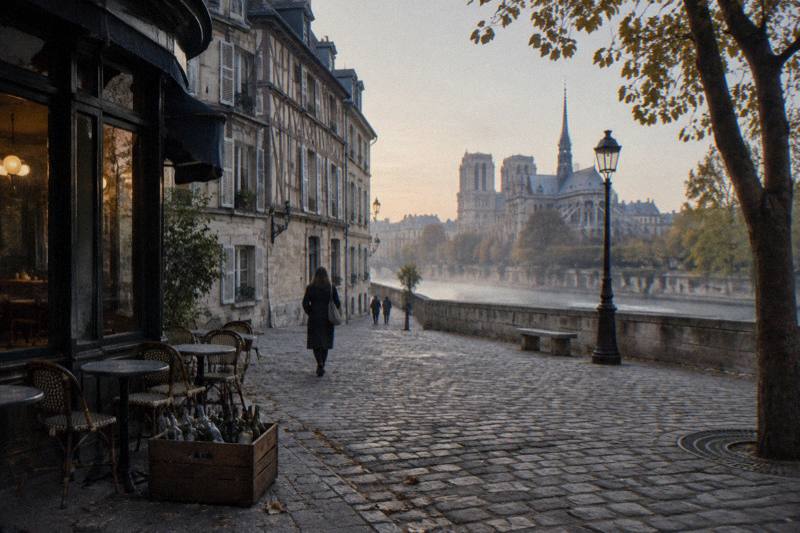
That trade, central atmosphere against thin budget supply, is the whole decision. The Latin Quarter earned its name from the university quarter whose students spoke Latin; the Sorbonne still anchors it, and the area keeps a village feel between Place de la Contrescarpe and the river that few central districts manage. For a first visit it is hard to beat on location. Everything below weighs the sleep side of the equation only: prices, the specific properties, taxes and the transport picture.
Two roster properties carry the affordable end here. Hotel Esmeralda is the pick, a hotel whose nightly rate and current rating sit together on the property page, and Hotel de Nesle is another budget option a few streets away. If neither fits, The People Paris Marais across the river is the format contrast worth checking first.
For context on what "good" means here: Paris Île-de-France welcomed 13.3 million visitors between June and August 2026, up 3 percent on the previous summer, and hotel occupancy across the city ran at 85.1 percent in July 2026. Central rooms are not getting easier to find, and the Latin Quarter feels that pressure more than most areas because its building stock is old, small and protected. Reading this site's overview helps frame the choice: start with the best cheap accommodation compared guide for the three stay types before committing to one neighbourhood.
How Much Does A Latin Quarter Room Cost Per Night?
Expect to pay above the city's budget floor. The Latin Quarter's cheap inventory is dominated by small independent hotels rather than hostels or aparthotels, and summer occupancy above 85 percent citywide keeps rates firm. Realistic Latin Quarter doubles sit well under the citywide all-category average of 217.50 euros from April 2026 but comfortably above hostel money, and beds in hostels, where they exist, start far lower.
Those planning figures come from the wider market data, not from promises by any property. The April 2026 UMIH observatory put the average Paris room, every category mixed together, at 217.50 euros with 83.6 percent occupancy; the February 2026 figure was 176.80 euros. Budget properties sit well under that average, but the Latin Quarter's floor is higher than the 18th or 19th arrondissements because nothing large or new gets built in the 5th. The one recent exception is elsewhere: Glint, a hybrid hotel at 66 boulevard Barbès in the 18e, was inaugurated in September 2026 offering 42 dorm-bed rooms and 8 private doubles from 40 euros a night, exactly the format the 5th lacks.
Add the tourist tax to any rate you compare. Paris charges it per adult per night, on top of the room price, and since 1 January 2026 the all-in amounts are fixed by hotel class: 2.60 euros at hostel and 1-star level, 3.25 euros at 2-star, 5.53 euros at 3-star, with unclassified accommodation charged at 5 percent of the pre-tax nightly cost per person, capped at 15.93 euros. The official breakdown is on the service-public.gouv.fr tourist tax page. Two adults staying four nights in a 3-star hotel each owe 5.53 euros per night, a sum that builds quickly beside the headline rate, and it is collected at the property rather than baked into most displayed prices.
It is worth understanding how the class system interacts with the quarter's character. Many small Latin Quarter hotels sit at 2-star or 3-star classification, not because the rooms are poor but because old buildings with modest floor areas struggle to meet the space and facility criteria of higher classes. For a budget traveller that is good news on tax: a 2-star room carries only 3.25 euros per adult per night, while the same building with one more star would carry 5.53. When you compare a 2-star and a 3-star property on price, fold the tax difference into the arithmetic rather than treating the displayed rate as the whole cost.
| Cost item | Planning figure | Notes |
|---|---|---|
| Double room, Latin Quarter budget hotel | below the 217.50 EUR citywide average | Check the live listing for the rate on your dates |
| Hostel bed, Paris-wide floor | from around 18 EUR | Rare in the 5th itself; common in the 18e and 19e |
| Hybrid hotel double, 18e example | from 40 EUR | Glint, inaugurated September 2026 |
| Tourist tax, 2-star | 3.25 EUR per adult per night | All-in rate from 1 January 2026 |
| Tourist tax, 3-star | 5.53 EUR per adult per night | All-in rate from 1 January 2026 |
| Single metro ticket | 2.55 EUR | Full fare, 2026 IDFM table |
The honest read: the Latin Quarter is a good place to stay if your nightly ceiling covers the quarter's cheapest doubles, and a poor fit if it only covers a hostel bed. Below that line, a bed in a hostel outside the 5th plus a 2.55 euro metro ride each way beats a strained budget inside it. The site's month-by-month price guide, when Paris is cheapest by month, shows how far the same room swings between February and June.
Timing shifts the numbers more than most visitors expect. The February 2026 average of 176.80 euros against April's 217.50 euros shows how much the whole market softens outside the high season, and the Latin Quarter follows the same rhythm even though its floor stays higher than cheaper districts. A traveller who can travel in late autumn or winter may find the 5th suddenly affordable, while the same budget in June buys a fraction of the room. Price your exact dates on the live listing before deciding the quarter is out of reach. Once your dates are set, whether booking direct with Paris hotels beats the booking sites is the next question to settle, since the tourist tax and the final rate can look different depending on how you reserve.
Which Budget Properties Sit In The Latin Quarter Itself?
Two roster hotels carry it: Hotel Esmeralda inside the 5th and Hotel de Nesle just over its edge in the 6th, both small independents rather than chains. Esmeralda is our pick for the quarter, with its nightly rate and rating on the property page. Hotel de Nesle is the same-family alternative at a similar position on the map. Beyond those, the quarter's budget cover is thin, and the nearest hostel and aparthotel supply sits across the river in the Marais.
This thinness is the article's core fact. A district can be lovely and still fail a budget search, and the 5th does that often: its buildings are old, its hotels are small, and several are mid-priced independents that never enter a cheap-hotel conversation. Hotel Esmeralda and Hotel de Nesle are the exceptions worth your attention, and both reward an early check of availability, because a handful of affordable rooms in a district at 85 percent citywide occupancy sell out first. When a district's entire budget inventory is two small properties, the difference between booking three months ahead and booking three days ahead is often the difference between getting the room and not.
Hotel de Nesle, the second of the two, shares the same small-scale Latin Quarter character; its price and current rating are on its property page. Between the two, Hotel de Nesle's property page is the comparison worth running against Esmeralda before booking anything. Because both are independents rather than chains, room types vary within the same building, so the cheapest listed room may differ meaningfully from the one shown in the photos; read the room description on the live listing rather than assuming.
If both are full or over budget, The People Paris Marais is the practical fallback: a hostel-format property one river crossing away, where a bed costs a fraction of a 5th double room and the walk home over the Seine takes under half an hour. Its rate and rating are on the live listing. This pattern, a hotel in the quarter or a bed across the river, is how most budget travellers actually resolve the Latin Quarter question. It is also a pattern that scales: if the Marais hostel is full too, the same logic extends outward to Montmartre and the canal districts of the 19e, each step adding a few minutes of metro time and subtracting a meaningful amount from the nightly spend.
Should a Latin Quarter room be your base?
The two properties above differ mainly on price and character, so check the cancellation terms on each listing before booking.
One practical point on arrival applies wherever you sleep in the 5th. Foreign guests at any Paris hotel or tourist rental fill in a police registration form at check-in, giving name, nationality, address and travel details; the host keeps it on file and passes it to the police only on request. It takes a minute and is routine, but knowing it exists removes the small moment of surprise at the desk after a late flight.
What Are The Trade-Offs Of Sleeping In The 5th Arrondissement?
The main trade-offs are noise, size and price, not safety or location. Rooms in the 5th tend to be small, buildings rarely have lifts, and streets around Rue Mouffetard and the river stay lively late. In exchange you get a district you can walk across in twenty minutes, two RER stations on your doorstep and some of the city's cheapest everyday food, bakeries and student cafes rather than restaurant strips.
Weigh it as a sleeping decision, not a sightseeing one. If you are out until midnight and up at eight, street noise matters more than ceiling height; ask for a room facing the courtyard, which small French hotels often have, when you book. The tourist-thin streets higher up the hill toward the Panthéon quiet down fast, while the riverfront end near Notre-Dame stays busy until late. None of this is a safety problem: the central arrondissements are among the city's most walked and most policed, and the site's safest budget areas guide covers the fuller picture.
Size is the honest cost of character. A budget double in the 5th is typically a compact room in a historic building with stairs, not a modern box. Travellers who need space for a family or a week-long stay often do better with an aparthotel elsewhere; the Paris aparthotels with kitchens guide lays out that option. For two nights, a couple, a city trip mostly spent outside, the small room is a fair price for the address. A kitchen also lets you dodge the restaurant premium entirely, shopping at markets and bakeries the way students in the quarter have always done.
There is also a booking-behaviour point worth naming. With so few affordable rooms, the Latin Quarter punishes late decisions harder than districts with deep supply. The site's piece on whether hotel prices drop on the day explains why waiting rarely pays in a high-occupancy city; in the 5th specifically it can mean the cheap rooms are simply gone. A district with forty budget properties absorbs a late booking; a district with two does not, and the remaining inventory is whatever mid-priced rooms the market has left.
The star-class lens from earlier applies here too. Because many 5th properties are old 2-star and 3-star buildings, what you are buying is location and atmosphere rather than facilities: expect character beams over a lift, and a welcome over a lobby. Travellers whose priority list puts a modern bathroom first and neighbourhood second should say so honestly and book elsewhere; travellers who want to open a shutter onto a Latin Quarter lane are buying exactly the right thing. The rest of the planning pages sit on Cheap Hotels In Paris.
Is The Latin Quarter Well Connected To Airports And Trains?
Yes, and unusually well for a district with no major station of its own. The 5th is served by RER B at Luxembourg and by Gare du Nord and Châtelet within easy reach, which covers both Paris airports and the Eurostar link. A single metro ticket costs 2.55 euros in 2026, and the airport ticket is a flat 14 euros full fare, per the official Île-de-France Mobilités fare table.
The airport ride is the part worth planning. The Ticket Paris Région <> Aéroports costs 14 euros full fare, 7 euros reduced, and covers travel between Paris and either Orly, via metro line 14, or Charles de Gaulle, via RER B; it allows connections for two hours from first validation, per the official 2026 IDFM fare table. From the Latin Quarter, RER B at Luxembourg runs direct to CDG, which is the simplest airport journey any central district offers. The same ticket covers Orly, so the return leg works whichever airport you fly from, and reduced-fare eligibility details are on the operator's fare page.
One live wrinkle: works on the RER B to Charles de Gaulle are reported to last until December 2026, with trains stopping at 22:45 on most nights during the late-summer phase, and October to December 2026 brings almost daily weekend and late-evening interruptions across the Île-de-France network as RATP and SNCF run a broad works campaign. A late arrival may mean a bus or a taxi instead of the train; budget an extra thirty minutes and a spare option. The Saint-Michel stop on metro line 4, right on the quarter's edge, is also closed until 19 December 2026 for works, reported in the same coverage, so plan the last leg of any line 4 journey with that closure in mind. If works on this scale make you question a central base, our guide to sleeping just outside Paris instead of the centre weighs edge hotels, ticket costs, and the tourist tax against the hassle.

For train travel beyond Paris, Gare de Lyon sits on the quarter's eastern side, walkable in fifteen minutes from most of the 5th, and Gare du Nord is a short RER hop. A traveller arriving at Gare du Nord with luggage can be at a Latin Quarter hotel in twenty minutes for the price of a single ticket; the site's Gare du Nord area guide covers that arrival in more depth if you are comparing the two. RER D also passes through Gare du Nord and Gare de Lyon, and press reports note significant disruptions on that line over the late-summer works window, which matters if you are connecting from the south or the north.
Day-to-day, the quarter is one of the easiest central districts to live in without a car or a taxi habit. Most of the 5th falls inside a twenty-minute walk of the Seine, and the metro and bus network covers the rest at 2.55 euros a ride. That walkability is a real budget lever: a traveller who walks the quarter, the islands and the riverbanks saves the several daily fares that a commuter-located hotel would impose, and those savings belong in the comparison when the Latin Quarter room costs more than a cheaper bed further out.
Should You Pick The Latin Quarter Or A Cheaper Neighbourhood?
Pick the Latin Quarter if your trip is short, your budget covers one of the quarter's cheap doubles, and being able to walk everywhere matters more than space. Pick a cheaper neighbourhood if you are staying five nights or more, travelling as a family, or capped at hostel-bed money: the 18e and 19e, Montmartre and the Marais all deliver more bed for the money, at the cost of a metro ride into the centre.
The format contrast makes the choice concrete. The People Paris Marais, a hostel in the 4e across the river, offers beds at a price no 5th double can approach; its rate and rating are on the live listing. A traveller choosing it over Hotel Esmeralda trades a private Latin Quarter room for a short walk over the Seine and a lower nightly spend, which for a solo visitor on a four-night trip is often the right trade. For a couple, the maths reverses: two hostel beds approach one cheap double, and the private room wins on value as well as comfort.
Neighbourhood by neighbourhood, the honest ranking for a budget sleeper puts the 5th high on charm and low on supply. Montmartre in the 18e has deeper budget inventory and its own character, helped by new supply like Glint's 42 dorm-bed rooms from 40 euros a night; the Marais pairs central location with the hostel fallback above; the 19e along the Canal de l'Ourcq is cheapest of all and now has Hostelle, the women-only hostel with beds from around 18 euros, on top of the existing stock. The site's ranking by price, cheapest areas of Paris by arrondissement, gives the full comparison with figures.
The decision rule this site would offer: book the Latin Quarter when a specific affordable room there is actually available on your dates, not before. Search Esmeralda and de Nesle first, price the Marais hostel second, and only then widen to other districts. Charming neighbourhoods do not need to be expensive ones, but this one, on current supply, needs to be searched rather than assumed.
Whatever you choose, both the featured Latin Quarter room and its fallbacks carry free cancellation on standard rates, so there is little cost to holding a room while you compare.
Common Questions About Staying In The Latin Quarter
Is It Good To Stay In The Latin Quarter In Paris?
Yes for short trips and walkers, with the caveat that cheap rooms are scarce. Two affordable roster hotels sit inside the 5th, Hotel Esmeralda and Hotel de Nesle, and beyond them the budget supply thins out fast. If your nightly budget only stretches to a hostel bed, a cheaper neighbourhood plus a 2.55 euro metro ride is usually the better plan.
Is the Latin Quarter expensive compared to other areas?
Moderately. It has few hostels and aparthotels, so the floor is set by small independent hotels, and citywide occupancy above 85 percent in July 2026 keeps rates firm. Expect rates under the citywide average of 217.50 euros but well above hostel prices, plus tourist tax of 3.25 euros at 2-star or 5.53 euros at 3-star per adult per night.
Is the Latin Quarter safe at night?
The 5th is among the most walked central districts and presents no unusual safety concern for visitors. As anywhere in Paris, keep phones off café tables and be aware on crowded metro platforms; the practical night-time issue in the quarter is street noise near the river and Rue Mouffetard, not crime.
How do I get from the Latin Quarter to the airports?
RER B at Luxembourg runs toward Charles de Gaulle, and the Ticket Paris Région <> Aéroports costs 14 euros full fare or 7 euros reduced, covering both CDG and Orly with two hours of connections. Note that works on the RER B airport branch are reported to run until December 2026, with early closures on many nights, so check your arrival time before relying on the train.
Are there hostels in the Latin Quarter?
Almost none, and that is the district's weakness for budget travellers. The practical hostel supply sits across the river in the Marais, 4e, at The People Paris Marais, or further out in the 18e and 19e, where beds start from around 18 euros a night. Many hostels sell private rooms as well as dorm beds; check the property page for room types.
What is the tourist tax in the Latin Quarter?
It is the same citywide taxe de séjour, charged per adult per night on top of the room price. Since 1 January 2026 the all-in rates are 2.60 euros for hostels and 1-star hotels, 3.25 euros for 2-star and 5.53 euros for 3-star, with unclassified accommodation at 5 percent of the pre-taxed nightly cost per person, capped at 15.93 euros.