Is Staying In Montmartre A Good Idea?
A plain-language look at whether a cheap hotel or hostel bed in Montmartre makes sense as a Paris base: prices, the hill versus the edges, transport and who should skip it.
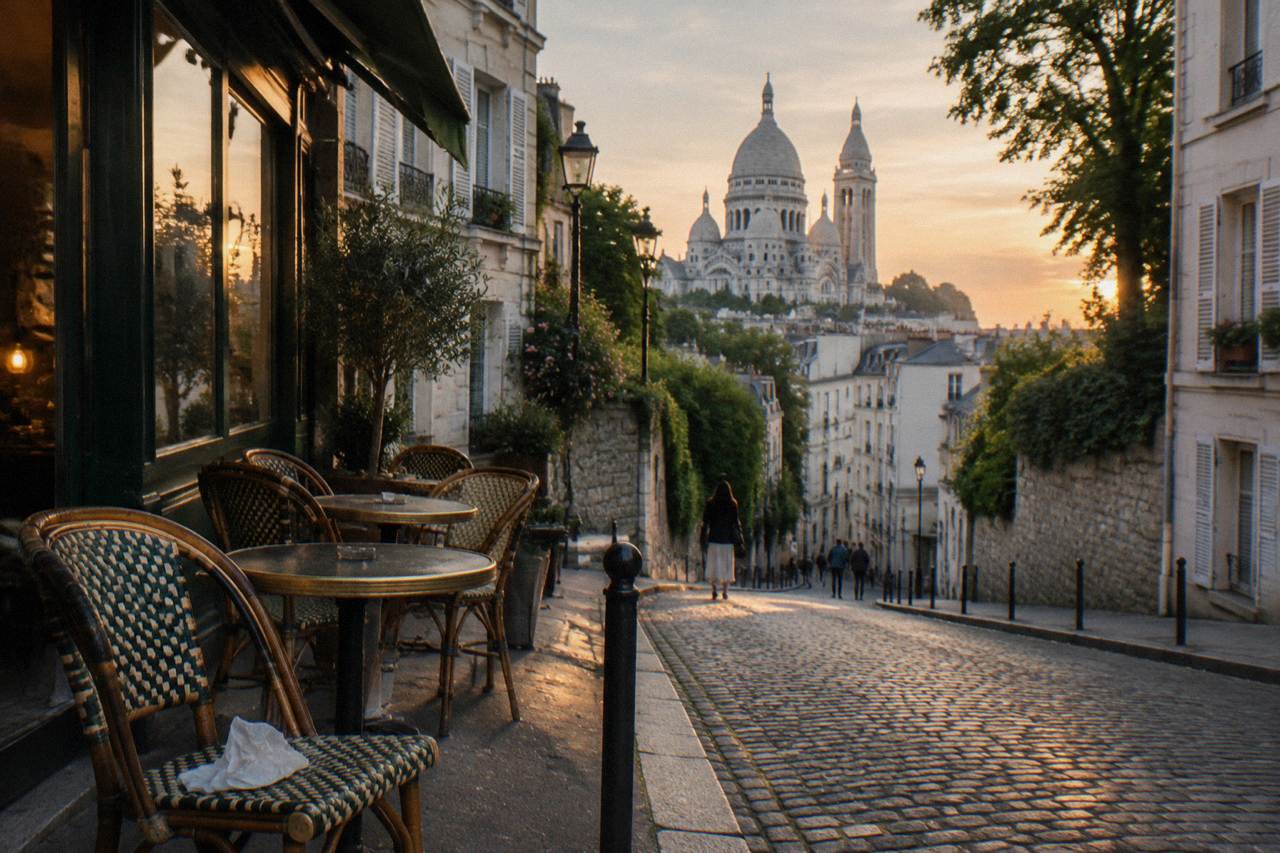
Montmartre sits on a hill in the 18th arrondissement, and everything about staying there flows from that single geographic fact. The views are real, the village streets are real, and so are the stairs, the evening crowds around the Sacre-Coeur forecourt and the walk home after the last metro. For a budget traveller the question is not whether Montmartre is charming. It is whether a cheap room on or near the hill buys a better Paris trip than the same money spent one metro stop further out. The same value question comes up on the other side of the Seine, and our honest guide to whether staying near the Eiffel Tower pays off weighs the charm of a landmark address against what you actually get for your money.
The honest answer is that it depends on what the trip is for. This article walks through the trade-offs with real figures: what a bed or room in the area costs, how the tourist tax adds up, how the hill compares with the Porte de Clignancourt edge, and what the current transport works mean for getting around. If you are weighing a hillside hotel against a cheaper bed on the flat, the numbers below should make the decision easier either way. If timing the booking matters as much as picking the right side of the hill, our guide to when Paris hotels actually drop their rates shows which days and months reward a little patience.
Is Staying In Montmartre A Good Idea?
Yes, for most budget travellers who want atmosphere and do not mind stairs or a walk to the metro, Montmartre is a genuinely good base, and the 18e and adjacent 9e hold some of the more affordable hotel and hostel beds inside the Peripherique. The compromise is thin metro coverage on the hill, heavy evening crowds near Sacre-Coeur, and prices that climb sharply on weekend nights. Since many budget travellers arrive at Gare du Nord on Eurostar or airport trains, our guide to reaching your Paris hotel from Gare du Nord covers the metro options, taxi fares, and RER B works you might face.
That is the short version. The longer version starts with what "Montmartre" actually means on a booking page, because the name gets stretched. Strictly, the historic quartiers sit between roughly Pigalle to the south and the Lamarck-Caulaincourt metro to the north, on the hill. But properties marketed as "Montmartre" can sit a long way downhill, in the 9e around Place de Clichy, or up at the Porte de Clignancourt edge near the flea market, where the streets are flatter, less photographed and noticeably cheaper per night.
The roster of cheap Paris properties reflects that spread. On the hillside itself you find small budget hotels like Hotel de Flore Montmartre, in the heart of the 18e within walking distance of the Sacre-Coeur steps, and Le Regent Montmartre, a hostel with dorm beds in the neighbouring 9e near the Anvers metro, plus Beau M Hostel, another dorm-bed option near the southern, busier end of the neighbourhood. Down the hill and into the 9e, the selection widens and the nightly rates generally soften, which is the pattern across the whole city: you pay for the view, or at least for the postcode.
None of this makes Montmartre a trap. It makes it a specific purchase. You are buying postcard streets, early-morning quiet in the back lanes before the crowds arrive, and one of the few Paris districts that feels like a separate village after dark. What you are not buying is central location in the museum-and-river sense: the Louvre, the Marais and the Latin Quarter are all a 20 to 30 minute metro or bus ride away. For a first visit built around those sights, that commute adds up. For a second visit, or a trip built on wandering rather than ticking, the commute rarely matters.
If that trade sounds right, these three properties are a fair cross-section of what the hillside offers at the cheap end:
Each one covers a different stay type: a traditional budget hotel double, a dorm bed, and a mid-point between them, so comparing their nightly rates side by side is the fastest way to see what the neighbourhood costs in euros.
What Does A Cheap Room In Montmartre Actually Cost?
Expect dorm beds in the 18e hostels from the low tens of euros per night, and budget hotel doubles priced per room on each property page rather than in any reliable citywide average. On top of the room price, every adult pays the Paris tourist tax per night: EUR 2.60 at a hostel or 1-star, EUR 3.25 at a 2-star, EUR 5.53 at a 3-star, collected at the property.
Those tax figures are the all-in amounts, including the regional levies stacked on the base taxe de sejour, and they apply to classified hotels, hostels, residences and furnished rentals alike, per the official service-public rate table for Paris. Unclassified accommodation is taxed differently, at 5 percent of the pre-tax nightly cost per person, capped at EUR 15.93, which is worth knowing if a listing does not state its star class.
| Stay type in Montmartre | Typical nightly basis | Tourist tax per adult per night | What moves the price |
|---|---|---|---|
| Hostel dorm bed | Per bed | EUR 2.60 (1-star / hostel class) | Room size, weekend nights, summer |
| 1-star hotel double | Per room | EUR 2.60 | Floor level, shared versus private bathroom |
| 2-star budget hotel double | Per room | EUR 3.25 | View, season, walk distance to metro |
| 3-star hotel double | Per room | EUR 5.53 | Hilltop streets, terrace, breakfast included |
Planning ranges are what they are: the cheapest beds sell out first, and Friday and Saturday nights in the 18e can cost double the midweek rate for the identical room. A useful budgeting habit is to price a four-night stay spanning a weekend and check whether splitting your booking, two weeknights in one property and two weekend nights in another, beats a single booking. It sometimes does, and the free-cancellation terms on most budget listings make the comparison cheap to run.
Against the citywide picture, the 18e holds its own. The average Paris hotel room across all categories ran EUR 217.5 in April 2026 according to the UMIH hotel observatory, well above anything in the cheap-hotel range this site covers, which tells you the affordable beds in Montmartre are a genuine bargain relative to the city mean, not a diluted version of it. The supply of cheap beds is also growing at the edges of the neighbourhood: Honotel inaugurated Glint, a hybrid hotel at 66 boulevard Barbes in the 18e with 50 rooms, 42 of them dorm-bed rooms, from EUR 40 per night, press reports on the September 2026 opening note.
Beau M Hostel is the dorm-bed option to price first if the hill is the priority. It sits on Montmartre's northern side, close to the Lamarck-Caulaincourt metro on line 12 and the village lanes below Sacre-Coeur, and its beds are sold per night with the price on the property page. For solo travellers and pairs who do not need a private room, it is usually the cheapest legal bed within walking distance of the Sacre-Coeur steps, and the per-bed tourist tax of EUR 2.60 per night keeps the add-ons modest.
Before booking anywhere in the district, one more cost layer: foreign guests will be asked to fill in a short individual police registration form at check-in, name, address, arrival and departure dates, which the host keeps on file. That is standard across all Paris accommodation and takes under a minute.
The Hill Or The Porte De Clignancourt Edge: Which End Should You Book?
The hill, between Pigalle and Lamarck-Caulaincourt, is the Montmartre of the postcards, and you pay for it in rate and in stairs. The Porte de Clignancourt edge to the north is flatter, cheaper, closer to a metro hub and the flea market, and visually ordinary. On the hill, expect a walk of several minutes to the nearest station; at the Clignancourt edge, you are at the terminus of line 4 in a couple of minutes.
That metro arithmetic matters more than most first-time visitors expect. The classic hill streets, rue Lepic, rue des Abbesses, the rue Norvins stretch by Sacre-Coeur, sit in a transport pocket served by the Abbesses and Lamarck stations at opposite ends and the Pigalle and Anvers stations downhill on the south side. Two of those four involve either a lift or a climb. If you come home late, after about 1am when the metro closes, the walk from the nearest night-bus stop to a hilltop address can add 15 minutes of steep pavement.
| Factor | The hill (Abbesses to Lamarck) | Porte de Clignancourt edge |
|---|---|---|
| Setting | Village streets, views, stone stairs | Flat, residential, market halls and flea market |
| Metro access | 5-12 min walk, some via lift or stairs | Line 4 terminus, also line 12 and RER B at the hub |
| Nightly rate feel | Higher, especially weekends | Noticeably lower for similar rooms |
| Evening noise | Crowds and buskers near Sacre-Coeur | Quieter, local traffic |
| Best for | Atmosphere, couples, second visits | Budget, families, early trains from Gare du Nord |
The trade is not only about money. The Clignancourt end puts you beside the Marche aux Puces, the largest flea market in the city, and on a direct line 4 run to Chateau-Rouge, Barbes and Gare du Nord, which is the airport connection point. The hill end puts the views and the morning bakery queues outside your door. Hotel de Flore Montmartre, in the 18e a short walk from the Sacre-Coeur steps, is the roster's hillside budget-hotel pick: a double room priced per night on the property page, in the middle of the streets people come to Montmartre for. If your heart is set on waking up in the village, this is the end to book, and the stairs are simply part of the deal.
Le Regent Montmartre covers a similar brief one notch along: another 9e budget property in the walkable zone below the basilica, with its nightly double rate on the listing. Between the hotel and the two hostels, the roster spans the price formats the district offers, and comparing all three on one screen is usually enough to settle which end of the hill, and which room type, fits the budget.
How Do You Get From Montmartre To The Rest Of Paris?
Line 4 is the workhorse: Clignancourt and Chateau Rouge stations run direct to Gare du Nord, Chatelet, the Latin Quarter and Montparnasse in 15 to 30 minutes, while line 12 from Pigalle and Abbesses crosses to Concorde and Saint-Germain. A single metro ticket costs EUR 2.55. Factor in current works: Saint-Michel on line 4 is closed until 19 December 2026, and the network is running frequent weekend disruptions through autumn.
The closure is a small but real nuisance for line 4 riders, since Saint-Michel is one of the Latin Quarter stops, though the nearby Cite and Odeon stations on other lines cover the same destination. The bigger planning item is the pattern: from October to December 2026 the RATP and SNCF are running an extensive programme of works across Ile-de-France, with interruptions on metro, RER and Transilien lines clustering on weekends and late evenings, so check your specific line the day before any early-morning departure.
For airport arrivals, the connection usually runs through Gare du Nord, four stops from Clignancourt. The Ticket Paris Region Aeroports costs EUR 14 full fare and covers travel between the city and either Orly, via metro line 14, or Charles de Gaulle, via RER B, with connections allowed for two hours from first validation, per the official Ile-de-France Mobilites fare page. One caveat if you land late at CDG: works on the RER B are bringing early evening closures on some dates, with trains stopping as early as 22:45 on most nights through September under the summer works schedule, so a late arrival may mean the Roissy bus or a taxi.
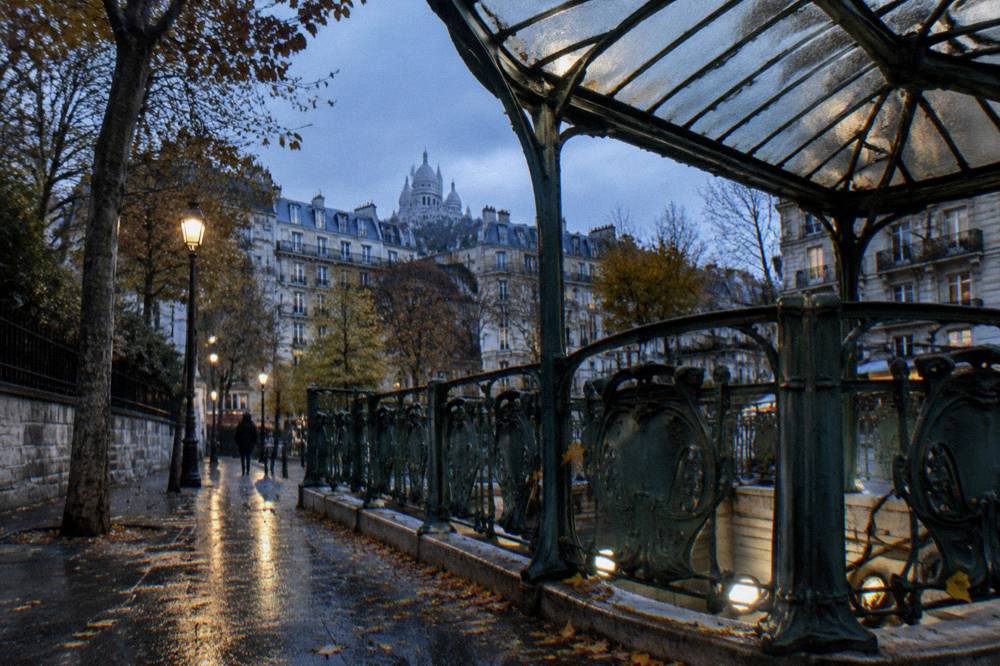
None of this makes Montmartre remote. It makes it a two-line neighbourhood: you will use line 4 for north-south trips and line 12 for the west end, and you will learn the busier station approaches quickly. Budget roughly EUR 2.55 per single journey, or weigh a carnet-style load on your phone if you expect four or more rides a day. The Hill's real transport cost is measured in shoe leather, not tickets: count the stairs once, then decide whether your itinerary returns home midday or only at night.
When Is Montmartre Most And Least Pleasant To Stay In?
Montmartre is at its best on weekday mornings before ten and at its most trying on weekend evenings, when the Sacre-Coeur forecourt and the rue Norvins strip fill with visitors. One calendar item stands out: the Fete des Vendanges de Montmartre runs 7 to 11 October 2026, drawing big crowds to the very streets you would be sleeping in, and hotel rates around it climb accordingly. Book outside those windows for quieter lanes and softer prices.
The grape harvest festival is the district's biggest annual event, five days of parades, wine samples and stalls across the hill and the Square Louise Michel below the basilica. It is a genuinely good spectacle if you are there for it, and a genuinely crowded base if you are not. The same logic applies in softer form to the whole summer high season: Paris welcomed 13.3 million visitors between June and August 2026, up 3 percent on the previous summer, so the postcard streets of the 18e carry their peak load exactly when the weather is best.
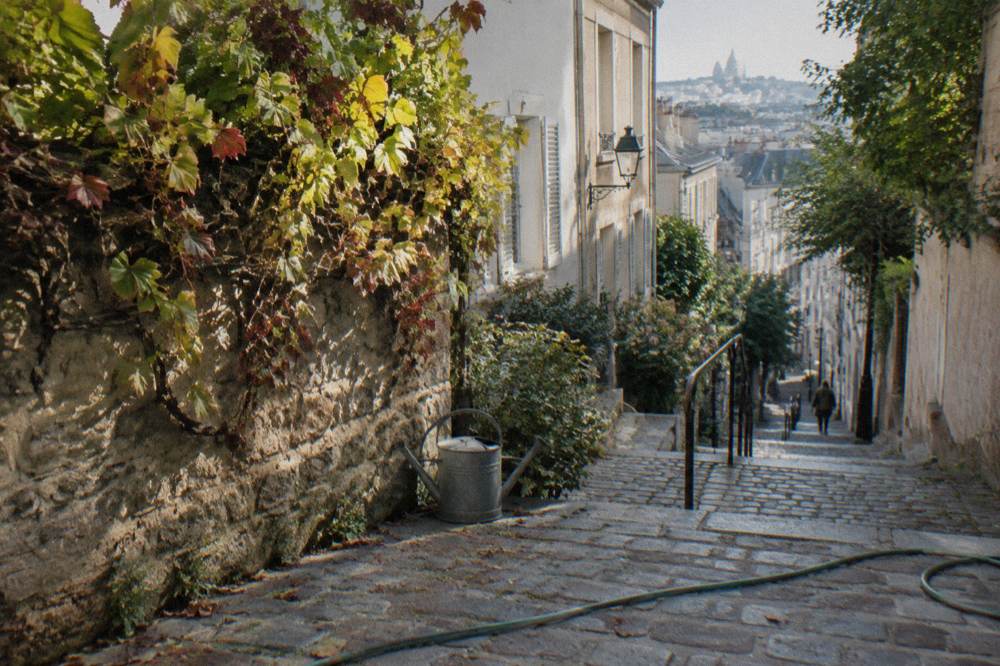
The quiet seasons reward the hill disproportionately. In November, and again in the January to February stretch, the lanes around rue Cortot and the Clos Montmartre vineyard feel like the village they used to be, and budget hotel rates in the 18e drop to their floor. The views do not change with the season. A traveller who books a hillside double in February gets the same staircase, the same bakery and roughly the same sunrise over the city as an August visitor, at a meaningfully lower rate and with far fewer people sharing the pavement.
Those two openings matter to a Montmartre decision more than they first appear. Both add cheap beds within a short metro ride of the hill, and the women-only Hostelle, documented on the City of Paris's own visit report, gives solo female travellers a hillside-adjacent option that did not exist a year ago.
Who Should Skip Montmartre Altogether?
Skip the hill if your trip is built around the Louvre, the Eiffel Tower and the Marais with tight daily timing, if stairs are a problem, or if you want the lowest possible nightly rate regardless of setting; the Porte de Clignancourt edge, the 9e or districts like the Latin Quarter beat it on all three. Book it if atmosphere, evening village life and views outweigh a daily 20 to 30 minute commute. The decision is preference, not correctness.
Mobility is the one factor that should genuinely change the answer. The hill is unavoidable: even the metro stations are vertical, with Abbesses among the deepest in the network, and a hotel "five minutes from Sacre-Coeur" means five minutes of slope. Anyone with knee, hip or stamina concerns should book on the flat, either at the Clignancourt end of the 18e or in the 9e around Place de Clichy, and visit the hill once by bus. The 30 or 31 bus routes climb the gradients so you do not have to.
Budget purists have a cleaner case against. The same money that buys a modest double on the hill buys a better room, or a whole extra bed in a dorm, one or two metro stops out. If your Paris is mostly museums and riverbanks, the marginal value of waking up in Montmartre is low, and the article on the cheapest arrondissements ranked by price does that arithmetic district by district. The counter-case, for a second or third visit, is that Montmartre after midnight, when the crowds drain away and the lit staircases empty out, is one of the few Paris experiences that costs nothing and cannot be scheduled.
For readers still deciding between neighbourhoods rather than for or against this one, the comparison of budget stays in Montmartre against the Latin Quarter is the natural next read, since the Latin Quarter is the classic low-commute alternative. And if the hill wins but the top-of-hill prices do not, the guide to budget hotel options by price band shows where the 18e and 9e properties sit in the citywide spread. As Cheap Hotels In Paris lays out across its guides, the cheapest bed in Paris is usually one metro stop outside the postcard, and Montmartre is the one district where many travellers happily pay the difference anyway.
If you have come down on the "yes" side, these are the three hillside properties worth comparing before anything else:
Common Questions About Staying In Montmartre
Is Staying In Montmartre A Good Idea?
For most budget travellers, yes: the 18e offers affordable hotel doubles and dorm beds, village atmosphere and views, in exchange for stairs, thin metro coverage on the hill itself and a 20 to 30 minute commute to the central sights. It suits second visits, walkers and anyone whose priority is the neighbourhood itself rather than the museums.
Is Montmartre expensive compared with other Paris areas?
Budget beds in the 18e sit well below the citywide average hotel room price, which ran EUR 217.5 across all categories in April 2026, but they run higher than comparable rooms at the Porte de Clignancourt edge or in outer districts. You pay a premium for the hillside streets, mostly on weekend nights.
How much is the tourist tax in Montmartre?
Every adult pays per night: EUR 2.60 in hostels and 1-star hotels, EUR 3.25 in 2-star hotels and EUR 5.53 in 3-star hotels. For two adults staying four nights in a 2-star, that is the nightly amount paid eight times over. The tax is collected at the property, not at booking.
Is Montmartre safe at night?
The residential lanes are generally quiet and unremarkable at night. The areas around Pigalle and Barbes are livelier and busier late, and the usual city precautions apply around crowds and late transit. The hill's main night-time hazard is practical: steep, cobbled stairs in low light.
Does the metro reach the top of Montmartre?
Partly. Abbesses and Lamarck-Caulaincourt serve the hill, with Abbesses reached by lift or a long spiral stair, while Pigalle and Anvers sit downhill on the south side. Porte de Clignancourt, at the northern edge, is a line 4 terminus with easy connections. Expect a 5 to 12 minute walk from most hillside hotels.
When should I avoid booking Montmartre?
Avoid the Fete des Vendanges, 7 to 11 October 2026, unless you want the festival itself, and expect peak crowds and rates through summer weekends. Weekday mornings in the shoulder seasons, November and February, give you the same streets at lower prices.