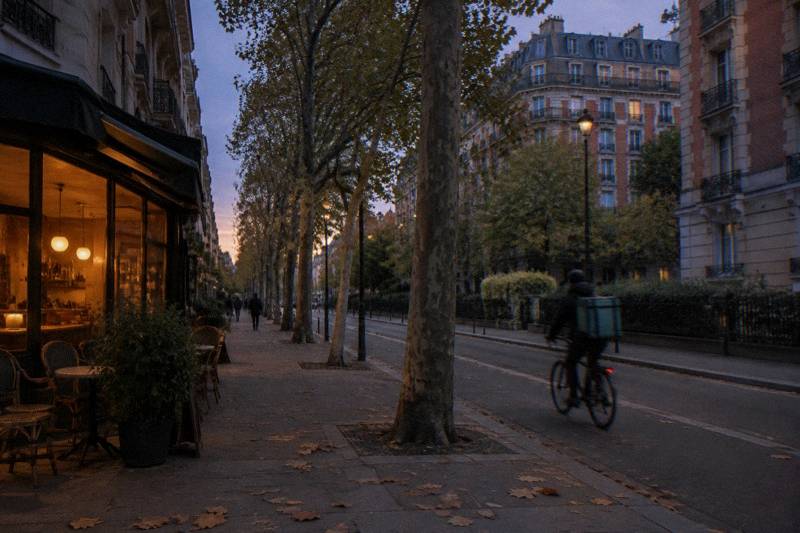
Where To Stay In Paris Safe And Cheap?
Which Paris areas are both safe and affordable, the security criteria that matter when booking a cheap bed, and the budget properties that meet them.
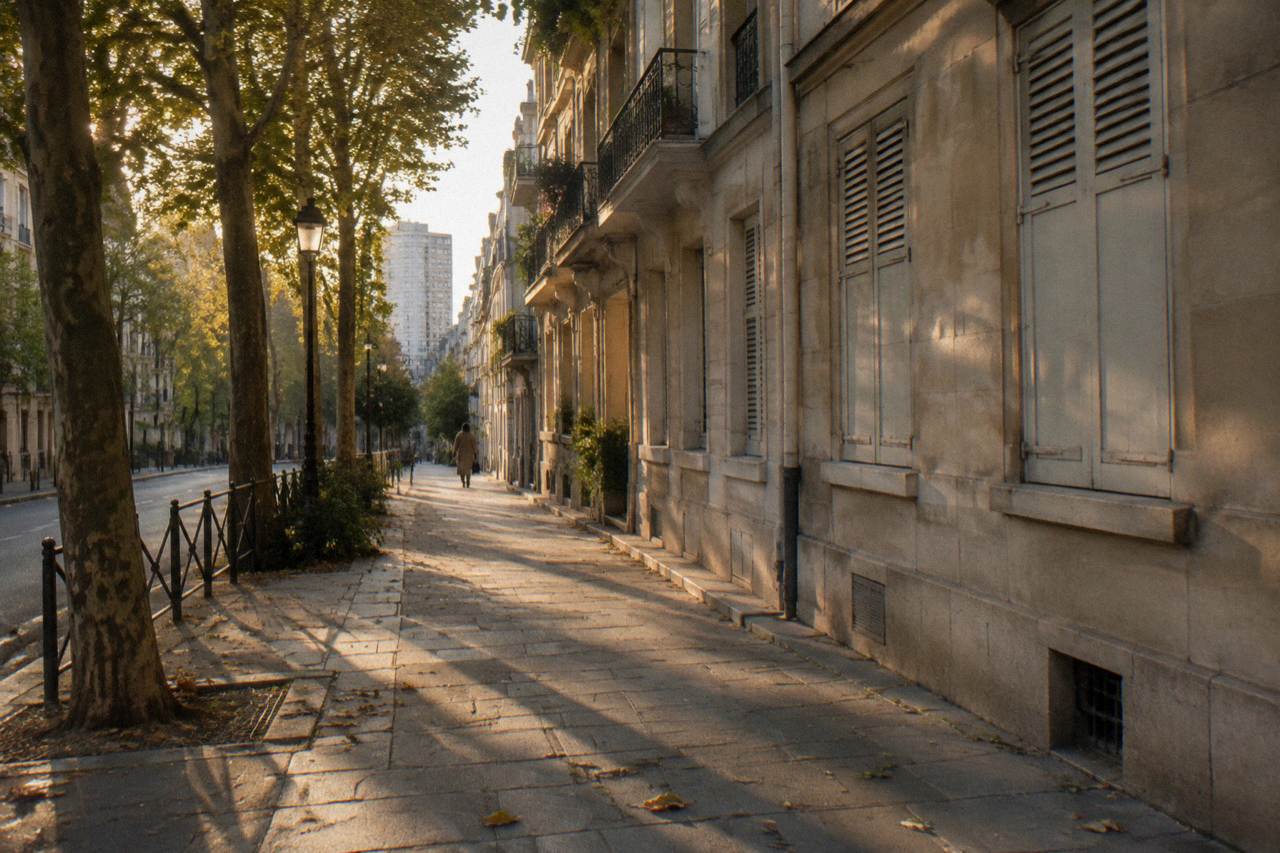
Where To Stay In Paris Safe And Cheap?
For a stay that is both safe and cheap, base yourself in Paris's residential arrondissements: the 14th around Alésia, the 17th around Batignolles, the 15th, and the outer edges of the 18th and 19th. Double rooms in budget hotels there frequently cost less than beds in the tourist core, because in Paris cheap and safe point to the same postcodes. For a closer look at what daily life is like in each of these neighborhoods, our guide to the safest budget-friendly parts of Paris covers the details street by street.
The cheapest beds in Paris cluster in exactly the areas where fewer tourists walk at midnight, which is not a coincidence. The tourist core around the Louvre and the Champs-Élysées carries the highest average room rates in the city; UMIH's hotel observatory put the all-categories Paris average at EUR 217.5 per night in April 2026, and that average is dragged up almost entirely by central properties. Step two metro stops outward and the price drops while the street noise drops with it. Before you grab that cheaper room two metro stops out, our guide to Paris listings and neighborhoods tourists should rule out explains which bargains come with catches.
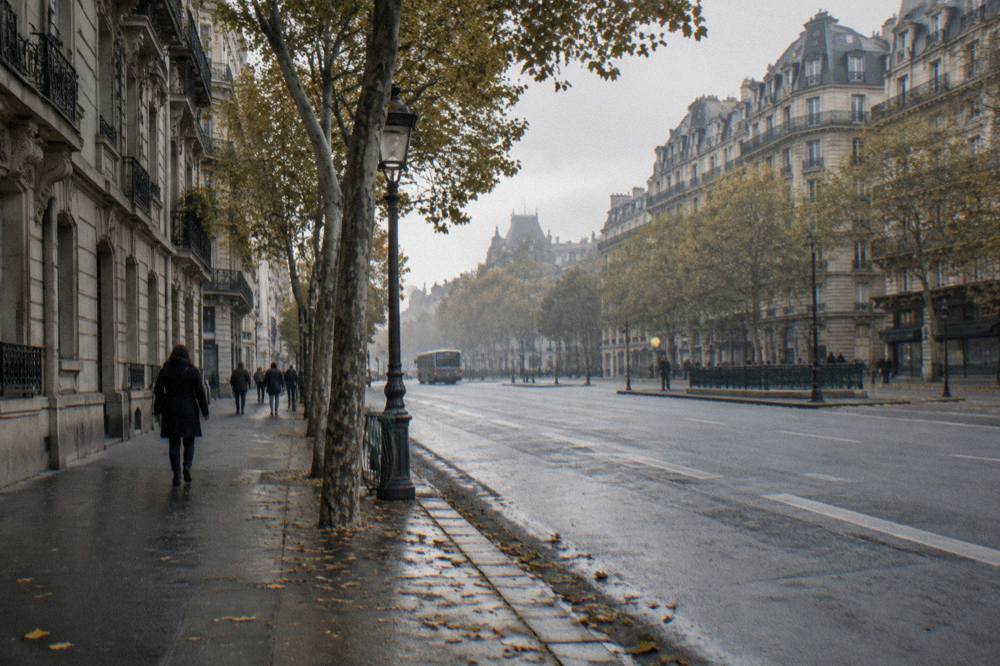
Safety in Paris is also a transport question, not just a postcode question. Since 30 March 2026, internal security agents of the SNCF and RATP have had reinforced powers in stations and on trains, including pat-downs in cases of proven risk and the ability to bar individuals who disturb public order from stations, under rules published by the French public service portal. The practical reading for a traveller: the ride home matters as much as the street you sleep on, and a budget hotel one block from a major interchange buys more peace of mind than a cheaper room a fifteen-minute walk from the nearest station. If you want a concrete test of that idea, our Latin Quarter budget stay guide looks at how one central district handles room prices, affordable hotel supply, and the ride back after dark.
Three budget properties illustrate the overlap this article keeps returning to. BB Hôtel Paris 17 Batignolles in the 17th, Hotel Madrigal in the 15th near the Pasteur metro stop, and Hotel Montparnasse Alésia in the 14th all sit in quiet residential quarters where nightly rates undercut the central average by a wide margin; the live figures are on each property page.
What Makes An Area Feel Safe At Night In Paris?
An area feels safe at night in Paris when three things line up: residents still occupy the streets, a metro station sits within a few minutes' walk, and the ground floors hold bakeries, pharmacies and bars that stay lit past ten. The 14th, 15th and 17th arrondissements tick all three boxes and still price double rooms well under the city average. Avoid judging an area by daytime crowds, because central streets empty sharply after offices close.
The single best predictor is whether people who live there go out in the evening. Streets around Alésia in the 14th, around the Batignolles market in the 17th, and along the rue de Commerce in the 15th keep their local life after dark, which means lit shopfronts, other pedestrians, and eyes on the street. A cheap room on a dead-central side street with shuttered offices below it can feel lonelier at midnight than a room three arrondissements out.
Proximity to a major station helps in two directions. Gare du Nord and Gare de Lyon have permanent security presences, and since March 2026 transport security agents can also intervene in the immediate vicinity of stations when an infraction has occurred, so the blocks around them are watched more, not less. Our guide to budget hotels near Gare du Nord covers that trade-off in detail: the station itself is busy and sometimes scruffy, but the side streets are ordinary residential Paris.
One more practical marker: check the location of the nearest station against current works. From October to December 2026 the RATP and SNCF are running extensive engineering works across Île-de-France, with almost daily interruptions on metro, RER and Transilien lines, especially on weekends and late evenings, as reported by Le Métropolitain. A hotel whose nearest station is closed for months, like Saint-Michel on Line 4 until 19 December 2026, loses some of its late-night safety advantage because the walk home gets longer.
| Criterion | Why it matters for safety | How to check before booking |
|---|---|---|
| Metro within 5 minutes' walk | Shorter walk home late at night | Map the property page's stated station |
| 24-hour reception | Someone on the door whenever you arrive | Listed on the property page |
| Lift | Matters with luggage on upper floors | Listed on the property page |
| Lit commercial street nearby | Activity and eyes on the street past 22:00 | Street view around the stated address |
| No long-term station closure nearby | Keeps the late-night ride home intact | Check works notices before travel |
Want a base with staff on duty around the clock rather than a self check-in code? The Batignolles option below is a budget hotel with round-the-clock reception.
Which Paris Arrondissements Are Both Affordable And Quiet?
The strongest safe-and-cheap candidates are the 14th (around Alésia and Pernety), the 17th (the Batignolles), the 15th (Commerce and Convention), and increasingly the 19th along the Canal de l'Ourcq, where new budget openings keep appearing. Each pairs nightly rates well below the central average with genuinely residential streets. The 18th splits: the south near Montmartre is lively, the quieter east end is cheaper.
The 14th is the quiet workhorse of Paris budget travel. Hotel Montparnasse Alésia sits in the heart of it, near the Pernety metro stop on line 13, one of the lines that runs the length of the city and lands you at Saint-Michel or Châtelet in a dozen minutes. The surrounding streets are low-rise, full of schools and grocery shops, and priced for locals. The current nightly rate for a double room is listed on the property page.
The 17th around the Batignolles is the 14th's northern twin: a village-feeling quarter with a covered market, squares lined with café terraces, and a metro connection at Rome or La Fourche. BB Hôtel Paris 17 Batignolles puts you inside this quarter at a budget-hotel price point, with the details on the property page. From here the Line 13 or Line 14 ride to the centre is short, and the evening streets around the square des Batignolles are family-busy rather than bar-busy.
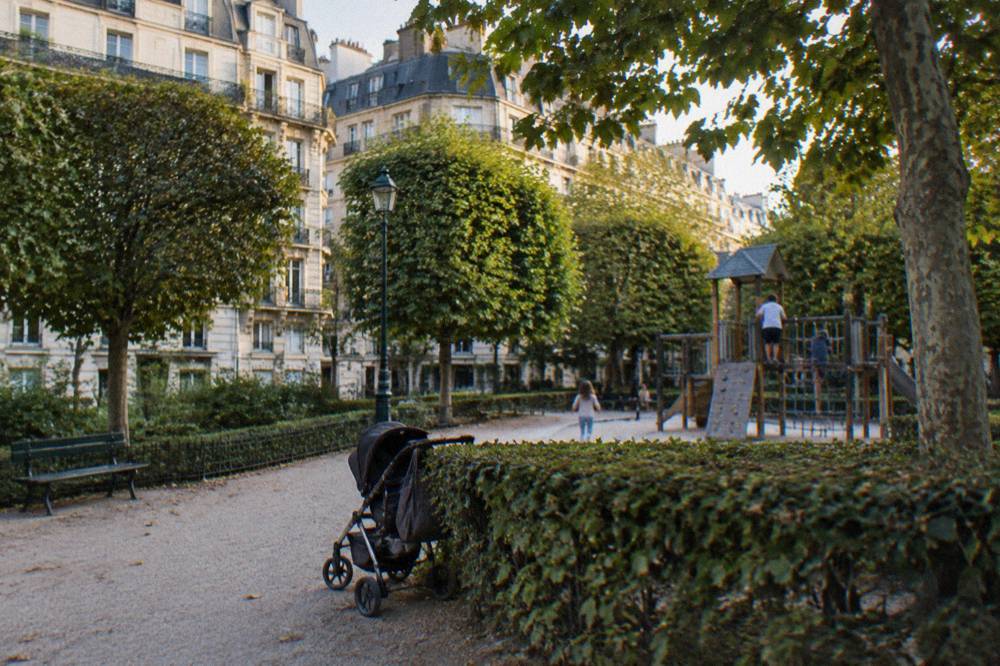
The 19th deserves a fresh look. The City of Paris itself has been promoting the area around the Canal de l'Ourcq, and the pace of budget openings there is real: Hostelle, billed by the City of Paris as the first women-only hostel in Paris, opened in June 2026 in the 19th near the canal, with dorm rooms of 4 to 18 beds and beds that can start at EUR 18 per night depending on room size. For solo female travellers weighing safety specifically, a women-only property in a canal-side district undergoing heavy investment is a combination that did not exist two years ago.
For a fuller area-by-area price ranking, see our guide to the cheapest areas to stay in Paris ranked by price; safety and price move together down most of that list.
Do Hostels Or Budget Hotels Feel Safer In Paris?
Budget hotels usually feel safer for one reason: reception. A staffed desk from early morning to late night, or around the clock, filters who enters the building, while many hostels control entry with key cards and cameras instead. That said, modern Paris hostels are small and professionally run, and a dorm in a well-reviewed hostel is statistically uneventful. The choice matters less than the criteria: staffed hours, lift, and station distance.
Concretely, compare what each property type gives you for the same money. Hotel Madrigal near the Pasteur metro stop in the 15th is a conventional budget hotel: private double rooms, a reception desk during published hours, and a residential street outside, with rates on the property page. A hostel bed in the 18th, at the hybrid property Glint, gives you something in between: inaugurated on 22 September 2026 by Honotel at 66 boulevard Barbès, it combines 50 rooms, 42 of them dorm-bed rooms and 8 private doubles, from EUR 40 per night. A bed behind a staffed hybrid front desk is a middle path many travellers now prefer. Everything else covered here is indexed on Cheap Hotels In Paris.
If your instinct is still "hotel, private room, someone at the desk", the budget-hotel comparison in our guide to the best budget hotels in Paris by price band breaks down exactly which properties sit in each nightly bracket. Safety-wise, the pattern is consistent: the cheaper bands are concentrated in the 14th, 17th, 18th and 19th, the same arrondissements praised above for quiet streets.
Two hygiene points apply to any shared accommodation anywhere, not only Paris: read recent reviews for mentions of bedbugs rather than assuming, and keep valuables on your person rather than in a dorm locker. Our post on whether all hostels have bed bugs covers the first point honestly, because the answer is no, but vigilance is still cheaper than treatment.
How Much Does Safety Add To The Price Of A Room In Paris?
Almost nothing, because the safety premium in Paris is really a centrality premium: rooms near the Louvre and the Eiffel Tower cost more without being measurably safer at night, so shifting from the 1st to the 14th or 17th typically cuts the nightly rate while raising evening street calm. The tourist tax, EUR 5.53 per adult per night in a 3-star and EUR 3.25 in a 2-star, stays identical across the city.
That tax point deserves a sentence of its budget context, since it is per adult, per night, and collected at the property rather than at booking; our longer explainer on the Paris tourist tax for hotels and hostels breaks down every category, with the official rates published by the French public service portal.
The real price driver in 2026 is demand, not safety. Paris Île-de-France welcomed 13.3 million tourists between June and August 2026, up 3 percent on the same period of 2025, with their spending reaching 7 billion euros, and hotel occupancy in July 2026 ran at 85.1 percent, up 1.4 percent year on year. In a market that full, the safe residential arrondissements are where the remaining value sits, because organized groups and weekend visitors bid hardest for central beds.
A quick per-person example makes the arithmetic tangible. Two adults, four nights in the 14th at a budget double room rate from the property page, plus the 2-star or 3-star tourist tax for each adult each night, plus metro journeys at EUR 2.55 per single ticket, loaded to a Navigo Easy card: even without quoting the nightly rate, the structure is visible. Tax and transport are fixed and modest; the room rate is the only lever, and it is the lever that moves most between arrondissements.
What Should You Check On A Property Page Before Booking?
Check five things in order: the exact street and nearest metro station, the reception hours, whether a lift serves your floor, the total price including tourist tax for every adult in the room, and the cancellation terms. A property page that shows all five plainly is itself a good sign. Any one of them missing is a reason to open a second tab and compare before paying.
The station check matters most for late arrivals. Confirm the line serving that station against the works calendar, because a replacement bus after 22:00 turns a five-minute walk into a forty-minute journey. The lift check matters in the older residential buildings that house most cheap doubles in the 14th and 17th: a fifth-floor room without a lift is fine for one night with a backpack, miserable for four with a suitcase.
For the tax, use the official figures rather than guessing: EUR 2.60 per adult per night in hostels and 1-star properties, EUR 3.25 in 2-star hotels, EUR 5.53 in 3-star hotels, per the French public service announcement of the 2026 Paris rates, which include the Île-de-France Mobilités levy of 200 percent that has applied since 2025. Unclassified properties, including many furnished rentals, pay 5 percent of the pre-tax nightly cost per person, capped at EUR 15.93. One quiet advantage of a classified budget hotel over an unclassified flat is that the tax is a small fixed amount rather than a percentage of the rate.
Cancellation terms are the last safety net, in the financial sense. Mid-range and budget hotels in Paris commonly offer free-cancellation rates a few days before arrival; take one even when a non-refundable rate looks cheaper, because plans and train schedules change, especially during a season of engineering works. The wording on each property page governs, and the "Check availability" links on this page always lead to the live listing with the current terms.
Where To Stay In Paris Safe And Cheap: The Shortlist
Pick the 17th for village calm with 24-hour reception options, the 14th for the deepest budget inventory and a direct Line 4 ride into the centre, or the 19th for the newest cheap beds along the canal, including a women-only hostel. All three beat the central districts on nightly rate while matching or beating them on evening street calm. Book a staffed property near an open station, price in the tourist tax, and take a free-cancellation rate.
The three properties this site keeps in the safe-and-cheap conversation cover the three bases. BB Hôtel Paris 17 Batignolles anchors the 17th; Hotel Montparnasse Alésia anchors the 14th; Hotel Madrigal near Pasteur anchors the 15th, the arrondissement that quietly offers some of the best value in the city because almost nobody writes about it. Each has its live rate, room types and reception details on its property page.
Whatever you choose, let the station calendar be your final filter this autumn. A EUR 20 saving on a room whose line is interrupted all weekend is not a saving, and the works run to December 2026. Beyond that, trust the pattern this article has shown from the data: in Paris, the safe answer and the cheap answer are, more often than not, the same address. For the wider picture of what a whole trip costs, our guide to how much a trip to Paris costs puts the room in context.
Common Questions About Safe And Cheap Stays In Paris
Where To Stay In Paris Safe And Cheap?
The 14th around Alésia, the 17th around the Batignolles, the 15th near Pasteur, and the 19th along the Canal de l'Ourcq offer the best combination of low nightly rates and calm residential streets. Budget properties such as BB Hôtel Paris 17 Batignolles, Hotel Montparnasse Alésia and Hotel Madrigal all sit in these quarters.
Is central Paris unsafe at night?
Central Paris is not unsafe in absolute terms, but its busiest tourist streets empty after offices and shops close, which makes them feel less comfortable than residential areas. The reinforced transport security rules in force since March 2026 cover stations and their immediate surroundings, so staying near a major interchange is a reasonable strategy.
Are hostels in Paris safe for solo travellers?
Paris hostels are generally small, professionally operated properties, and several new openings, including hybrid properties with staffed front desks, have raised the standard. Solo female travellers can also consider Hostelle in the 19th, described by the City of Paris as the city's first women-only hostel, with beds from EUR 18 per night.
Does the tourist tax differ between safe and less safe areas?
No. The tourist tax is set by accommodation category, not by arrondissement: EUR 2.60 per adult per night in hostels and 1-star properties, EUR 3.25 in 2-star hotels and EUR 5.53 in 3-star hotels, all including the regional levy. The same category costs the same tax everywhere in Paris.
Should I avoid an area whose metro station is closed for works?
Treat long station closures as a real cost. Works across the Île-de-France network run from October to December 2026, with Saint-Michel on Line 4 closed until 19 December 2026 and République on Line 8 until April 2027. A closed station lengthens the late-night walk home, which erodes both the safety and the convenience you booked for.
Is it better to book a hotel or an apartment for safety?
A budget hotel with staffed reception offers a controlled entrance and someone to ask at any hour, which many travellers value for peace of mind. A furnished apartment can be cheaper for longer stays but usually means self check-in. Check reception hours and lift access on the property page before deciding; this site compares the two options cost-side in its hotel versus apartment guide.